The most common reason people take a high-interest loan is not a luxury. It is an emergency: a medical bill, a lost job, a broken bike they need for work, an urgent family trip. An emergency fund is a pool of readily available money that you do not touch for anything else. It is the base of every sensible financial plan, because it stops one bad month from turning into years of debt.
How much do you need?
A commonly used rule is 3 to 6 months of essential expenses. The right number within that range depends on how stable your income is.
| Your situation | Suggested cover |
|---|---|
| Stable salaried job, no dependents | 3 months |
| Salaried with dependents or loans | 6 months |
| Freelancer, gig worker, business owner, commission-based pay | 6 to 12 months |
| Single earner with children or elderly parents | 6 to 12 months |
A worked example
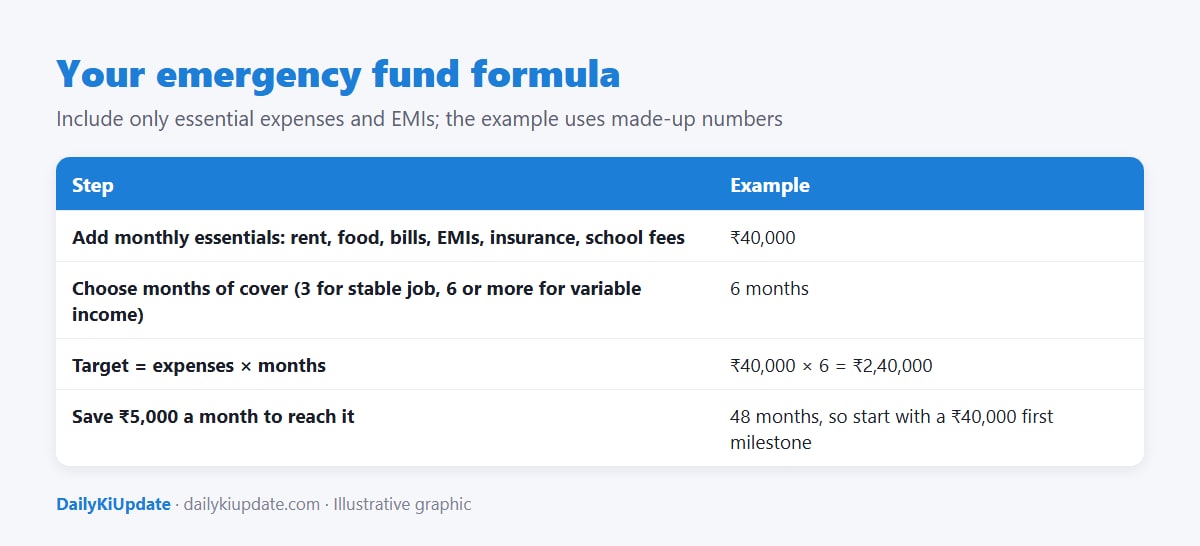
Say your essential monthly expenses are:
- Rent: ₹15,000
- Groceries and utilities: ₹10,000
- Loan EMI: ₹8,000
- Insurance premiums, school fees and transport: ₹7,000
The total is ₹40,000 a month. For six months of cover, the target is ₹2,40,000. This number includes only essentials. Leave out holidays, dining out and shopping, since you would cut them first in a real emergency.
Where to keep the emergency fund
An emergency fund must be safe and quickly accessible. It is not meant to earn high returns. Common options in India are:
| Option | Why it works | Watch out for |
|---|---|---|
| Savings account (preferably in a separate account) | Instant access, DICGC insurance for deposits up to ₹5 lakh per bank | Low interest; you may be tempted to spend it |
| Sweep-in fixed deposit | Higher interest, with money available when needed | Check how sweep-out works and any penalty |
| Liquid or overnight mutual funds | Usually a better return than a savings account; redeemed in about a day | Not guaranteed; returns can vary slightly; taxable |
| Short fixed deposits or recurring deposits | Predictable | Premature withdrawal penalties |
A practical approach is a split: one month of expenses in a savings account for instant needs and the rest in a sweep-in FD or a liquid fund.
Do not keep an emergency fund in equity mutual funds, stocks, crypto, real estate or gold jewellery. These can fall in value exactly when you need the cash, or take days or weeks to sell.
How to build it, step by step
- Calculate your target using the formula above.
- Start with a mini-goal, such as ₹10,000 or one month of expenses. A first milestone is easier to reach and gives you something right away.
- Open a separate account for the fund and give it a name. Mental separation helps.
- Automate the saving. Set a standing instruction right after salary day. Even ₹3,000 to ₹5,000 a month adds up.
- Use windfalls. Add part of any bonus, tax refund, or festive gift. Diwali bonus season is a good time. Read our Diwali 2026 calendar for the money and tax points.
- Cut one recurring cost and redirect it, for example an unused subscription. Tools from our list of budgeting apps for beginners can help you spot them.
- Refill after use. If you spend from the fund, make rebuilding it the next priority.
What counts as an emergency?
- Job loss or a sharp fall in income
- Medical bills not covered by insurance
- Urgent home or vehicle repairs that affect work or safety
- Urgent family travel
A sale, a gadget upgrade or a holiday is not an emergency.
Emergency fund versus insurance
They do different jobs. Health and term insurance cover large, rare risks. The emergency fund covers medium, more frequent shocks and the gap while an insurance claim is being processed. You need both. See our health insurance checklist.
Frequently asked questions
How much emergency fund should I have?
Three to six months of essential expenses, more if your income is irregular or you have dependents.
Should I invest or build an emergency fund first?
Build at least a starter fund of one to three months first. Then invest through SIPs while you continue to build the rest.
Can I keep my emergency fund in an FD?
Yes. A sweep-in or short FD works, but check the penalty for early withdrawal.
Is gold an emergency fund?
Not a good one. Prices fluctuate and selling or pledging jewellery takes time and incurs costs.
What if I have loans?
Include EMIs in your expense number. Keep a small emergency fund while you repay high-interest debt such as card dues.
Sources to verify
- DICGC: deposit insurance coverage on bank deposits
- SEBI: investor education on liquid funds and mutual funds
General information, not financial advice.