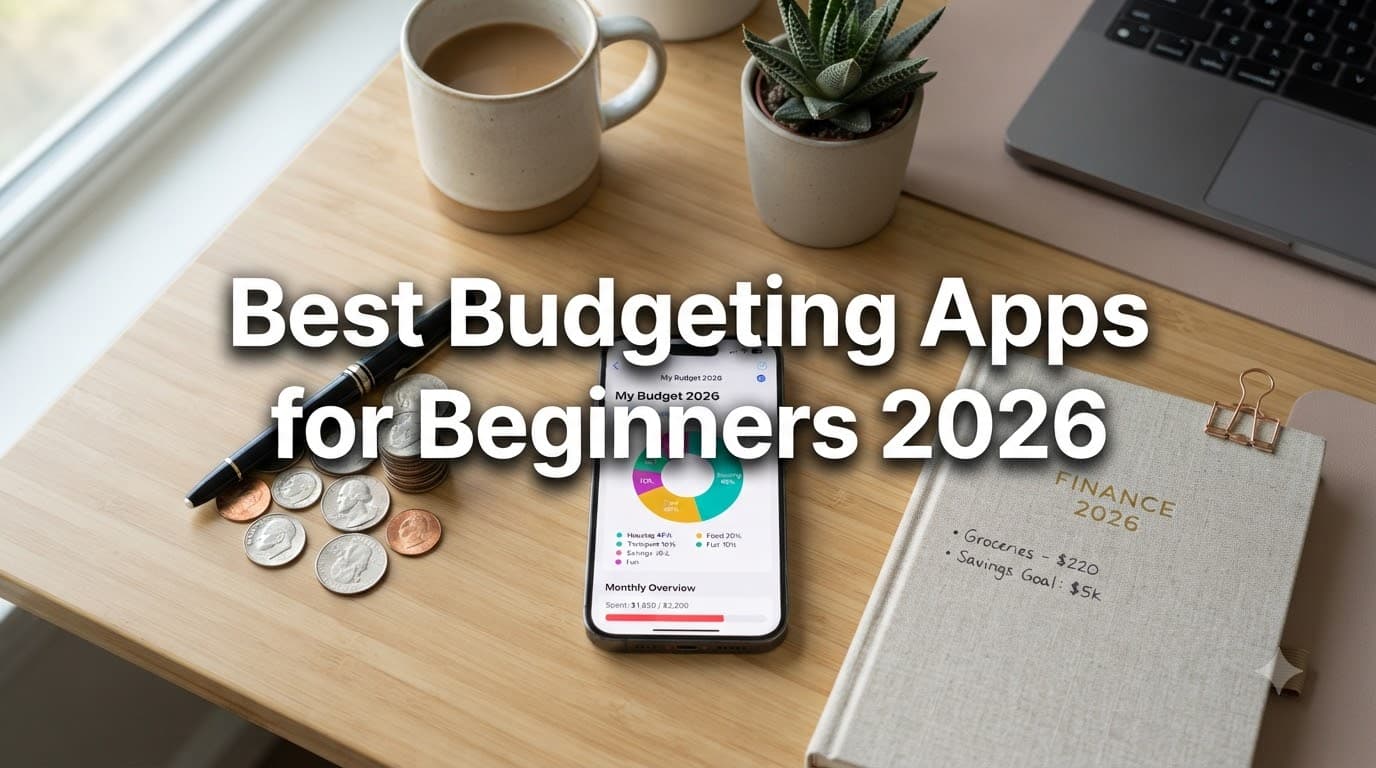
If you've ever reached the end of the month and wondered where all your money went, you're not alone. The good news: the best budgeting apps for beginners make it easy to see your spending, set limits and start saving, often for free.
But with dozens of money management apps out there, picking one is confusing. Some are built for detailed planners, some for people who just want a quick look at their spending, and some only work well in certain countries.
In this guide we compare the 9 best budgeting apps for beginners in 2026, covering free budgeting apps and paid options, what each one costs, and who it suits best. We've also included picks that work well for readers in India.
Quick Picks: Best Budgeting Apps for Beginners at a Glance
Best free budgeting app overall: Goodbudget
Best for simple monthly budgets: EveryDollar
Best for building strong money habits: YNAB
Best all-in-one money dashboard: Monarch Money
Best for "how much can I spend today?": PocketGuard
Best for couples and shared budgets: Spendee
Best for manual tracking with many currencies: Wallet by BudgetBakers
Best automatic expense tracker for India: Axio
Easiest for complete beginners: Monefy
How We Chose These Budgeting Apps
We focused on what matters most to someone who has never budgeted before:
Ease of use: can you set it up in under 15 minutes?
Free plan or free trial: can you try it without paying?
Budgeting method: does it teach good habits, not just show charts?
Price: is the paid plan worth it for a beginner?
Availability: does it work on Android and iPhone, and in your country?
Prices below are in US dollars unless stated and were checked in 2026. App prices change often, and some apps charge a different amount in India, so always check the app store before you subscribe.
The 9 Best Budgeting Apps for Beginners in 2026
1. Goodbudget: best free budgeting app for beginners
Goodbudget uses the classic envelope budgeting method: you split your income into digital "envelopes" such as Rent, Groceries and Fun, and spend only what's in each one. It doesn't need your bank login, so you enter spending yourself, which keeps you aware of every purchase.
Price: free plan with a limited number of envelopes; Premium costs $10/month or $80/year.
Pros: genuinely free, no bank linking needed, syncs across devices so couples can share a budget, free budgeting courses.
Cons: manual entry takes a few minutes a day; design feels basic.
Best for: beginners who want a free, simple system and full control.
Try it: goodbudget.com · Image alt text: Goodbudget envelope budgeting app for beginners
2. EveryDollar: best for simple monthly budgets
EveryDollar, from Ramsey Solutions, uses zero-based budgeting: you give every rupee or dollar of income a job until your budget reaches zero. Its clean, step-by-step setup makes a first monthly budget feel easy.
Price: free version with unlimited manual budgeting; Premium (bank sync and extra tools) costs $17.99/month or $79.99/year.
Pros: very easy to start, clear monthly view, great for paying off debt.
Cons: bank syncing needs Premium; the monthly price is high; built mainly for US users.
Best for: beginners who want a simple, guided monthly plan.
Try it: everydollar.com · Image alt text: EveryDollar zero-based budget app on a phone
3. YNAB (You Need A Budget): best for building money habits
YNAB is famous for changing how people think about money. It's also zero-based, built on four simple rules, and comes with plenty of free tutorials and workshops. It has a learning curve, but many users say it helped them break the paycheck-to-paycheck cycle.
Price: $14.99/month or $109/year after a 34-day free trial (no card needed). Verified college students can get a free year.
Pros: excellent at changing habits, strong learning resources, one subscription can be shared with family.
Cons: no free plan; takes a week or two to learn; bank sync works best in the US, UK, Canada and parts of Europe.
Best for: beginners serious about getting out of debt or saving consistently.
Try it: ynab.com · Image alt text: YNAB budgeting app showing zero-based budget
4. Monarch Money: best all-in-one money dashboard
Monarch connects your bank accounts, credit cards, loans and investments in one place. You can choose a flexible budget or a detailed category budget, and it adds a net worth tracker, bill reminders and reports.
Price: $14.99/month or $99.99/year, with a free trial.
Pros: modern design, very flexible, great for couples, shows your full financial picture.
Cons: no free plan; best suited to US users with supported banks.
Best for: beginners who want automation and a complete overview of their money.
Try it: monarchmoney.com · Image alt text: Monarch Money personal finance dashboard
5. PocketGuard: best for "how much can I spend?"
PocketGuard answers one simple question: how much money is safe to spend today after bills and savings? For beginners who feel overwhelmed by detailed budgets, that single number is very helpful. It also spots recurring subscriptions you may have forgotten.
Price: PocketGuard Plus costs $12.99/month or $74.99/year, with a lifetime option. A free trial is available; check the app store for any current free version.
Pros: very fast setup, simple "safe to spend" number, subscription tracker, debt payoff planner.
Cons: relies on bank linking; best for US users; fewer features without paying.
Best for: busy beginners who want a quick daily check.
Try it: pocketguard.com · Image alt text: PocketGuard app showing safe-to-spend amount
6. Spendee: best budgeting app for couples
Spendee is a colourful, easy expense tracker with shared wallets, so you can budget with a partner, family or flatmates. Its charts make it easy to see where your money goes.
Price: free Basic plan (one wallet, one budget); Plus from about $1.99/month or $14.99/year; Premium with bank sync about $5.99/month or $35.99/year (prices vary by country).
Pros: beautiful charts, shared wallets, works in many countries and currencies, including INR.
Cons: free plan is limited; bank sync doesn't support every bank.
Best for: couples and roommates sharing expenses.
Try it: spendee.com · Image alt text: Spendee budget planner with spending charts
7. Wallet by BudgetBakers: best for manual tracking and multiple currencies
Wallet is a polished expense tracker that works worldwide. The free version is manual, but it offers budgets, categories and clear reports, and it handles many currencies well, which is useful if you travel or earn in more than one currency.
Price: free manual version; Premium adds bank sync, unlimited accounts and sharing (from about $5.99/month, with a lifetime option).
Pros: clean design, strong reports, global currency support, read-only bank connections.
Cons: free version is manual only and shows frequent upgrade prompts; Premium is pricier than some rivals.
Best for: beginners outside the US and anyone tracking multiple currencies.
Try it: budgetbakers.com · Image alt text: Wallet by BudgetBakers expense tracker app
8. Axio: best automatic expense tracker for India
Axio (formerly Walnut, and acquired by Amazon in 2025) reads your bank and card SMS alerts to track spending automatically, so you don't have to type in every UPI payment. It's one of the easiest ways for Indian users to see their monthly spending without effort.
Price: expense tracking is free.
Pros: automatic tracking from SMS, works with most Indian banks, no manual entry.
Cons: mainly for Android; needs SMS permission; cash spends must be added by hand; the app also promotes credit products.
Best for: Indian beginners who want automatic tracking.
Try it: axio.co.in · Image alt text: Axio expense tracker app for India
9. Monefy: easiest app for complete beginners
Monefy is about as simple as budgeting gets: open the app, tap a category, type the amount, done. Logging each expense by hand builds awareness of your spending, which is exactly what a beginner needs.
Price: free version available; Premium from about $2.49.
Pros: extremely simple, quick to log, works offline, supports any currency.
Cons: no bank sync; limited planning features compared with YNAB or Goodbudget.
Best for: total beginners who want to start tracking today.
Try it: search "Monefy" on Google Play or the App Store · Image alt text: Monefy simple expense tracker for beginners
Also read: [Add a link to a related post on your blog, e.g. "How to Save Money on a Small Salary"]
Budgeting Apps for Beginners: Comparison Table
App | Best for | Free plan? | Paid price (approx.) | Bank sync | Budget method |
|---|---|---|---|---|---|
Goodbudget | Free envelope budgeting | Yes | $80/year | No (manual) | Envelope |
EveryDollar | Simple monthly budgets | Yes | $79.99/year | Premium only | Zero-based |
YNAB | Building money habits | 34-day trial (free year for students) | $109/year | Yes | Zero-based |
Monarch Money | All-in-one dashboard | Trial only | $99.99/year | Yes | Flexible or category |
PocketGuard | Daily safe-to-spend | Trial | $74.99/year | Yes | Safe-to-spend |
Spendee | Couples and sharing | Yes (limited) | From $14.99/year | Premium only | Expense tracking |
Wallet by BudgetBakers | Multi-currency tracking | Yes (manual) | From ~$5.99/month | Premium only | Expense tracking |
Axio | Automatic tracking in India | Yes | Free | Via SMS | Expense tracking |
Monefy | Total beginners | Yes | From ~$2.49 | No | Expense tracking |
How to Choose the Right Budgeting App
The best budget app is the one you'll actually open every week. Use these questions to decide:
Do you want it free? Start with Goodbudget, EveryDollar (free version), Monefy or Axio.
Do you want automatic tracking? Choose an app with bank sync, like YNAB, Monarch or PocketGuard (in the US) or Axio (in India).
Do you want to change your habits? Zero-based apps like YNAB and EveryDollar make you plan every rupee or dollar in advance.
Do you budget with a partner? Goodbudget, Spendee and Monarch let you share a budget.
Do you live in India? Global apps with bank sync often don't connect to Indian banks. Pick an INR-friendly app such as Axio, Spendee, Wallet or Monefy, or use Goodbudget manually.
Do you just want to try budgeting? Download Monefy and log every expense for 30 days. You'll learn a lot about your habits.
Tip: Try one app for at least a month before switching. Most people quit budgeting because they keep changing apps, not because the app is bad.
Is it safe to link my bank account?
Reputable budgeting apps use read-only connections through trusted providers, which means they can see transactions but can't move your money. Still, check an app's privacy policy, use a strong password and turn on two-factor authentication. If you're not comfortable linking accounts, manual apps like Goodbudget and Monefy work perfectly well.
5 Budgeting Tips for Beginners
A budgeting app is a tool. These simple habits make it work:
Try the 50/30/20 rule. Put about 50% of your take-home pay towards needs (rent, food, bills), 30% towards wants (eating out, shopping) and 20% towards savings or paying off debt. Adjust the numbers to fit your life.
Track every expense for 30 days. Including small UPI payments, chai and food delivery. Small spends add up fast.
Pay yourself first. Move money into savings on payday, before you spend on anything else.
Build an emergency fund. Aim for 3 to 6 months of essential expenses, starting with a small goal like one month.
Review your budget weekly. Ten minutes every Sunday is enough to stay on track and fix problems early.
Final Thoughts: Which Budgeting App Should You Choose?
The best budgeting apps for beginners in 2026 make managing money simple, even if you've never made a budget before. If you want a free budgeting app, start with Goodbudget or EveryDollar. If you're ready to invest in better habits, YNAB is worth the trial. And if you live in India, Axio or Monefy are easy places to start.
Pick one app, use it for 30 days, and you'll understand your money better than ever.
Which budgeting app do you use? Share your favourite in the comments below!
Disclaimer: This article is for general information only and isn't financial advice. App features and prices change often; check the official app store listing before subscribing.
Frequently Asked Questions
What is the best budgeting app for beginners? For most beginners, Goodbudget is the best free budgeting app because it's simple and teaches the envelope method. If you're willing to pay, YNAB is the best for building lasting money habits.
Are there free budgeting apps that actually work? Yes. Goodbudget, EveryDollar's free version, Monefy and Axio are all free and genuinely useful. The main trade-off is that free plans usually need manual entry or have limits.
What is the best budgeting app in India? Axio is a popular choice for automatic tracking from bank SMS alerts. For manual tracking in rupees, Monefy, Spendee and Wallet by BudgetBakers work well.
Is YNAB worth it for beginners? It can be, if you're committed. YNAB has a learning curve, but its 34-day free trial and tutorials help. College students can get a free year.
What is the easiest way to start budgeting? Download a simple app like Monefy or Goodbudget, track every expense for a month, then set spending limits using the 50/30/20 rule.
Do budgeting apps need my bank password? Apps with bank sync connect through secure, read-only services. Manual apps like Goodbudget and Monefy never need your bank details at all.
Prices and features checked in October 2026.