India is often called the diabetes capital of the world, and a large share of people with high blood sugar do not know they have it. That is because in the early years, type 2 diabetes can cause few or no obvious symptoms. By the time the signs are clear, the sugar may have been affecting blood vessels, nerves, eyes and kidneys for years.
This guide explains the early warning signs, how to read the main tests, and who should get checked. It is for information only. Diagnosis and treatment must come from a doctor.
Quick answer
- Common early signs: frequent urination, excess thirst, constant hunger, unexplained weight loss, tiredness, blurred vision, slow-healing wounds, and tingling in hands or feet.
- Diabetes is diagnosed by a fasting blood glucose of 126 mg/dL or higher, an HbA1c of 6.5% or higher, or a 2-hour glucose of 200 mg/dL or higher on a glucose tolerance test, usually confirmed with a repeat test.
- Prediabetes (fasting 100 to 125 mg/dL, HbA1c 5.7% to 6.4%) is a warning, and it can often be reversed or delayed with lifestyle changes.
Early symptoms to watch for
- Frequent urination, especially at night
- Increased thirst and a dry mouth
- Increased hunger even after eating
- Unexplained weight loss, more common in type 1 diabetes but also seen in type 2
- Fatigue that does not go away with rest
- Blurred vision
- Slow-healing cuts, frequent skin or urinary infections
- Numbness or tingling in the hands or feet
- Dark, velvety patches of skin in the neck, armpits or groin (acanthosis nigricans), which can signal insulin resistance
These signs can have other causes, so having one or two does not mean you have diabetes. But if you have several, or a risk factor, get tested.
Understanding the tests
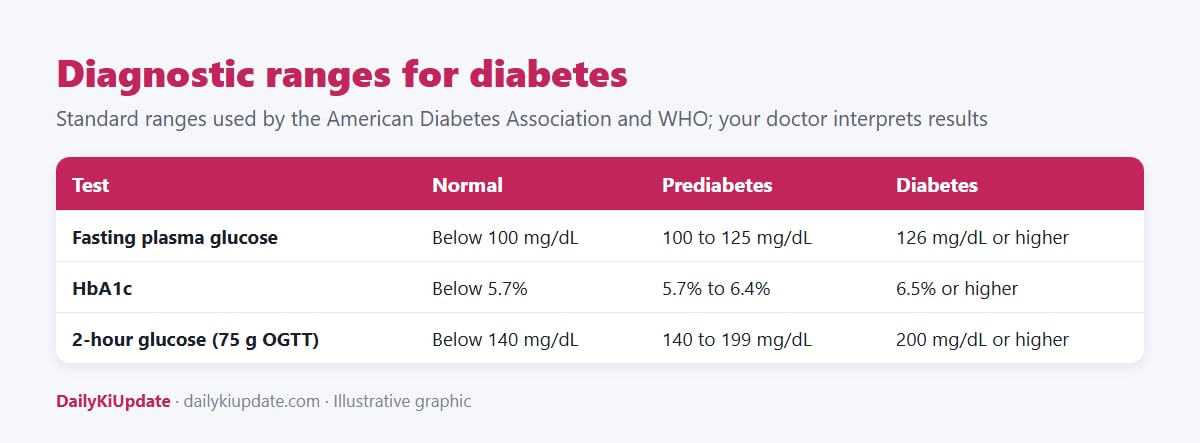
- Fasting plasma glucose (FPG): blood sugar after at least 8 hours without food.
- HbA1c: reflects average blood sugar over about the last 2 to 3 months. It does not require fasting. It can be less reliable in people with anaemia or some blood disorders.
- Oral glucose tolerance test (OGTT): you drink a measured glucose solution and your blood sugar is checked two hours later.
- Random plasma glucose of 200 mg/dL or more with classic symptoms also indicates diabetes.
Lab ranges can vary slightly, and one abnormal result is usually repeated. Indian guidelines also note that Indians can develop diabetes at lower body weights, so waist size matters.
Who should get tested?
- Anyone aged 35 or over, regularly, according to many Indian guidelines. Doctors may suggest earlier screening if you have risk factors.
- People who are overweight or have a large waist. In India, a waist over 90 cm for men and 80 cm for women is a commonly used marker of central obesity.
- Those with a family history of diabetes, particularly in parents or siblings
- People with high blood pressure, high cholesterol or fatty liver
- Women who had gestational diabetes or PCOS
- People who are physically inactive
What helps prevent or delay type 2 diabetes
- Move regularly. Aim for at least 150 minutes of moderate activity a week, such as brisk walking, plus muscle-strengthening exercise twice a week.
- Cut refined carbohydrates and sugar-sweetened drinks. Prefer whole grains, dals, vegetables and fruit. Watch the portion size of rice, rotis and sweets, which matters during the festival season.
- Keep your weight in a healthy range. Even a modest weight loss, around 5% to 7% of body weight, reduces risk in people with prediabetes.
- Sleep 7 to 8 hours and manage stress.
- Quit tobacco and limit alcohol.
- Test regularly if you are at risk.
If you are told you have prediabetes
It is not a diagnosis of diabetes, but a signal to act. Many people with prediabetes can bring their numbers back to normal with lifestyle changes. Your doctor may recommend retesting every six to twelve months, and in some cases medication.
If you already have diabetes
- Follow your doctor's treatment plan and do not stop or change medicines on your own or because of something you read online.
- Monitor blood sugar as advised, and get HbA1c checked usually every three to six months.
- Get yearly checks of eyes, kidneys, feet and cholesterol.
- Take any foot injury or infection seriously.
- Know the signs of very low sugar (shakiness, sweating, confusion) and very high sugar with illness, and when to get urgent care.
Fasting during festivals
If you have diabetes and plan to fast for Navratri or Karwa Chauth, talk to your doctor first. Skipping meals or medicines can cause dangerous drops or spikes in blood sugar. See our festival guides on Navratri 2026 and Karwa Chauth 2026.
Frequently asked questions
What is a normal HbA1c?
Below 5.7%. Between 5.7% and 6.4% is prediabetes, and 6.5% or higher indicates diabetes.
What is a normal fasting blood sugar?
Below 100 mg/dL. Between 100 and 125 is prediabetes, and 126 or higher is in the diabetes range.
Can diabetes be reversed?
Type 2 diabetes can go into remission in some people with significant weight loss and lifestyle change, but it needs medical supervision, and monitoring should continue.
Do I need to fast before an HbA1c test?
No. HbA1c does not require fasting, though a fasting glucose test does.
Is sugar the only cause of diabetes?
No. Genetics, weight, inactivity, age and other factors all matter. Eating sweets does not directly "cause" diabetes, but a diet high in calories and refined carbohydrates contributes to weight gain and insulin resistance.
Sources to verify
- American Diabetes Association: Standards of Care in Diabetes (diagnosis criteria)
- WHO: diabetes fact sheet
- ICMR: Indian guidelines and diabetes research
This article is for general awareness and is not a substitute for medical advice. See a doctor for testing and treatment.