Dengue is a mosquito-borne viral illness that spikes in India after the monsoon, which is exactly where we are in October. Most people recover at home. A small number develop severe dengue, which can be life-threatening, and the most dangerous period often begins just as the fever seems to be getting better.
This guide explains the symptoms, the warning signs that mean you should go to a hospital without waiting, and the habits that keep mosquitoes from breeding around your home. It is based on guidance from the World Health Organization (WHO). It is educational, not a substitute for a doctor's advice.
Quick answer
- Cause: the dengue virus, spread by Aedes mosquitoes (mainly Aedes aegypti). It does not spread directly from person to person.
- Symptoms: sudden high fever with severe headache, pain behind the eyes, muscle and joint pain, nausea, vomiting and sometimes a rash.
- Urgent warning signs: severe stomach pain, persistent vomiting, bleeding from the nose or gums, blood in vomit or stool, rapid breathing, extreme tiredness or restlessness. They usually appear 3 to 7 days after the first symptoms, often as the fever drops.
- Treatment: there is no specific antiviral. Care means rest, fluids and monitoring, with hospital care for severe cases.
- Prevention: remove standing water, protect yourself from daytime mosquito bites.
Symptoms of dengue
Symptoms usually begin 4 to 10 days after the bite of an infected mosquito and last for 2 to 7 days. According to WHO, many infections are mild or show no symptoms at all. When symptoms do appear, they typically include:
- High fever, often above 40°C (104°F)
- Severe headache and pain behind the eyes
- Muscle, bone and joint pain (dengue was once nicknamed "breakbone fever")
- Nausea and vomiting
- Swollen glands
- Skin rash
The warning signs that need urgent care
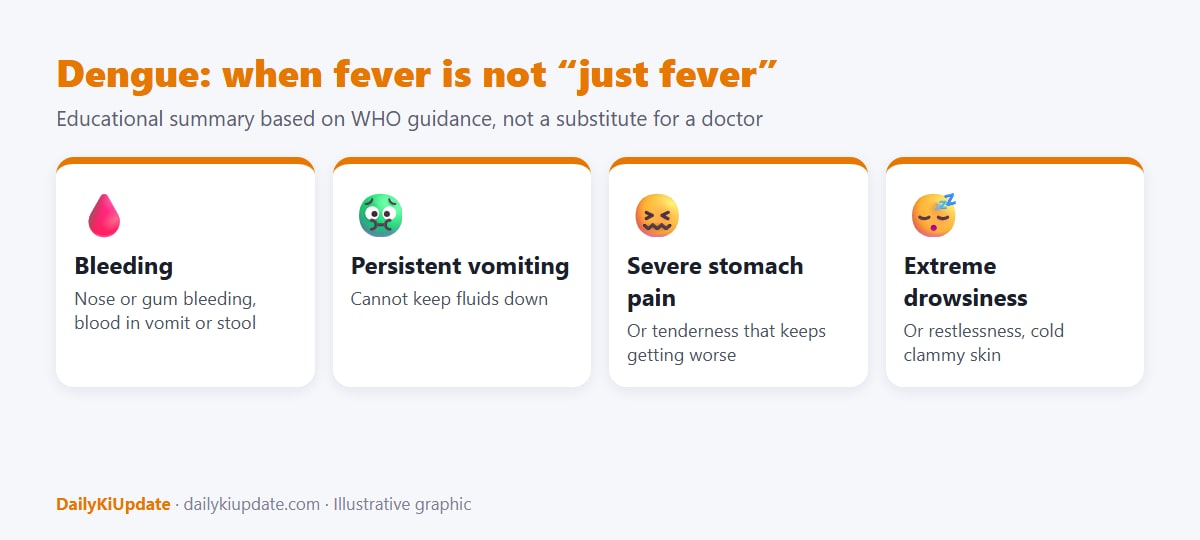
The critical phase can come in the 24 to 48 hours around the time the fever falls. Seek medical care immediately if you or a family member has:
- Severe abdominal pain or tenderness that is getting worse
- Persistent vomiting, or being unable to keep fluids down
- Bleeding from the nose or gums, easy bruising, or blood in vomit or stool
- Rapid breathing or difficulty breathing
- Extreme tiredness, drowsiness, or restlessness
- Cold, clammy skin, or very little urine
Do not wait for a platelet number on a lab report to decide whether to go to the hospital. The symptoms matter more than any single count, and your doctor will interpret blood tests together with how you look and feel.
What to do at home with mild dengue
- See a doctor early for a diagnosis. A test such as NS1 antigen is most useful in the first few days, while antibody tests become useful later.
- Rest and drink plenty of fluids: water, ORS, coconut water, soups and fresh juices.
- Use paracetamol for fever and pain, in the dose your doctor advises.
- Avoid aspirin and ibuprofen or similar anti-inflammatory painkillers. WHO advises against them in suspected dengue because they can increase bleeding risk.
- Do not self-medicate with antibiotics. Dengue is a virus, and antibiotics do not work against it.
- Get follow-up checks as advised, especially around days 3 to 7, even if you feel better.
- Protect the patient from more bites by keeping them under a net or in a screened room, so mosquitoes do not pick up the virus and spread it to others.
Who is at higher risk of severe disease?
- People who have had dengue before and get infected with a different type. There are four dengue virus types, and a second infection carries a higher chance of severe illness.
- Infants, young children and older adults.
- Pregnant women.
- People with long-term conditions such as diabetes, high blood pressure or asthma.
How to prevent dengue at home
Aedes mosquitoes breed in small collections of clean, still water, and they bite mostly during the day, with peaks in the early morning and the hours before dusk. This is why preventing dengue is a household job.
- Empty and scrub weekly: coolers, buckets, flower pot trays, bird baths, fridge trays, old tyres and anything that holds water. Eggs stick to the sides, so scrub, don't just pour out.
- Cover water storage with tight lids, including overhead tanks.
- Fix leaks and don't let water collect on terraces or in balcony corners.
- Use repellents on exposed skin and wear full-sleeved clothing, especially in the morning and evening.
- Fit window and door screens, and use nets for infants and during daytime sleep.
- Report neighbourhood breeding sites, such as open plots or construction sites with stagnant water, to your local municipal body.
Common myths
- "Papaya leaf juice cures dengue." There is no solid evidence that it does, so do not use it in place of medical care.
- "Low platelets always mean a transfusion." Transfusion decisions depend on bleeding and the doctor's assessment, not just the number.
- "Once the fever is gone, I'm safe." Not necessarily. This is when warning signs can appear.
- "Dengue spreads by touching a patient." It spreads through mosquito bites, not contact.
Frequently asked questions
What is the first symptom of dengue?
Usually a sudden high fever, often with a severe headache and pain behind the eyes.
How long does dengue last?
Symptoms commonly last 2 to 7 days, though tiredness can last longer.
Which painkiller is safe for dengue fever?
Paracetamol is the medicine generally recommended. Avoid aspirin and ibuprofen unless a doctor specifically advises otherwise.
Can dengue spread from person to person?
Not directly. A mosquito must bite an infected person and then bite someone else.
When should I go to the hospital?
Go immediately if you see any warning sign: severe stomach pain, repeated vomiting, bleeding, breathing difficulty, extreme drowsiness or cold, clammy skin.
Is there a vaccine for dengue in India?
Dengue vaccines have been developed and are used in some countries, but availability and recommendations vary. Ask your doctor or check with the Ministry of Health for the current position in India.
Sources to verify
- WHO fact sheet: Dengue and severe dengue for symptoms, warning signs and treatment guidance.
- National Centre for Vector Borne Diseases Control (NCVBDC) for India-specific information and guidelines.
This article is for general awareness. If you suspect dengue, see a qualified doctor.