From 15 October 2026, some UPI payments to merchants will carry a fee for the shop, not for you. NPCI released a set of FAQs on 15 September 2026 explaining the new UPI MDR (Merchant Discount Rate) framework, and the Finance Ministry has since said that person-to-person transfers and merchant payments up to ₹2,000 stay free of MDR.
That is the headline. The details are where most people get confused, because the rules differ by amount, by type of merchant and by how much a shop earns through UPI each month. This guide puts the published rules in one place, works out the numbers in rupees, and separates what is confirmed from what is still unclear. Everything is as reported at the time of writing, 6 October 2026.
Quick answer: what changes from 15 October 2026?
You, as a customer: no UPI fee. MDR is a charge inside the merchant payment system, not something added to your payment.
P2P transfers: still free, whatever the amount.
Merchant payments up to ₹2,000: no MDR.
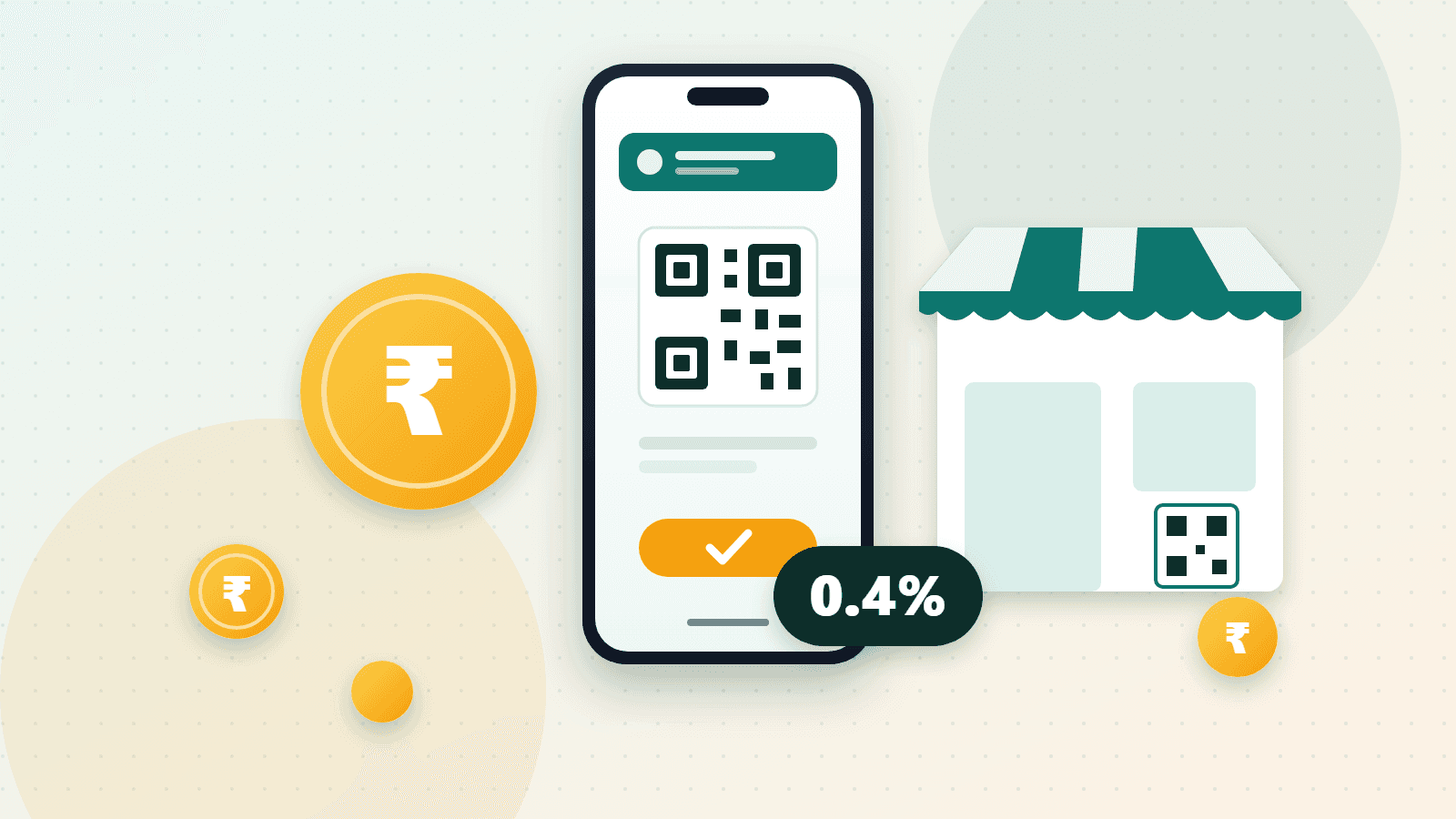
Merchant payments above ₹2,000: 0.4% MDR on specified person-to-merchant (P2M) transactions, capped at ₹300 per transaction.
Small merchants: those receiving up to ₹1 lakh a month through UPI QR codes continue to pay zero MDR.
Essential services: a flat ₹5 per transaction above ₹2,000 instead of a percentage.
The government says about 96% of merchant transactions fall outside the new charge, either because they are below ₹2,000 or because the merchant is covered by the small-merchant exemption.
What is MDR on UPI, in plain words?
MDR stands for Merchant Discount Rate. It is the fee a merchant pays to the banks and payment companies involved when it accepts a digital payment. Card payments have carried MDR for years. UPI payments to merchants have had zero MDR for a long time, which is why paying by UPI has felt completely free for everyone.
The new framework brings back a small MDR for a limited set of UPI merchant payments. According to NPCI's FAQs, the money is meant to support technology upgrades, fraud prevention, cybersecurity and the long-term running of the UPI system.
The new UPI MDR rules at a glance
| Type of UPI payment | MDR from 15 October 2026 |
|---|---|
| Person-to-person (family, friends, self-transfer) | None, any amount |
| Payment to a merchant up to ₹2,000 | None |
| Payment to a merchant above ₹2,000 | 0.4% of the amount, maximum ₹300 |
| Railways, telecom, insurance, fuel, agricultural inputs (above ₹2,000) | Flat ₹5 per transaction, as reported |
| Mutual funds, securities and broker payments (capital markets) | 0.02% of the amount, maximum ₹300, as reported |
| Small merchants receiving up to ₹1 lakh a month via UPI QR | Zero MDR |
| Credit-linked UPI (such as RuPay credit cards on UPI) | Outside this framework, as reported |
Different news reports list slightly different categories under the ₹5 flat rate, and some include utilities or educational institutions. Treat the exact category list as something to confirm in NPCI's FAQ document before you rely on it.
How much is the charge? Worked examples in rupees
Because the 0.4% rate has a ₹300 cap, the cap starts to matter at exactly ₹75,000 (0.4% of ₹75,000 is ₹300). Below that, the fee rises with the amount. The table below applies the published rates to sample payments. These are our own illustrative calculations, not figures published by NPCI.
| Payment to a merchant | Rule that applies | MDR the merchant pays |
|---|---|---|
| ₹1,800 (grocery bill) | Up to ₹2,000 | ₹0 |
| ₹2,000 | Up to ₹2,000 | ₹0 |
| ₹3,000 | 0.4% | ₹12 |
| ₹10,000 (phone repair, appliance) | 0.4% | ₹40 |
| ₹50,000 (laptop) | 0.4% | ₹200 |
| ₹75,000 | 0.4%, reaches the cap | ₹300 |
| ₹2,00,000 (jewellery) | Cap applies | ₹300 |
| ₹10,000 insurance premium | Essential-service flat rate | ₹5 |
| ₹1,00,000 mutual fund payment | Capital-markets rate (0.02%) | ₹20 |
Notice what this means in practice. The fee is a tiny share of a big-ticket bill: ₹300 on a ₹2 lakh purchase is 0.15%. It is a bigger share, 0.4%, on mid-sized payments between ₹2,000 and ₹75,000.
What this means for you as a customer
For day-to-day spending, nothing visible changes. Chai, groceries, auto fares, restaurant bills under ₹2,000 and every transfer to a friend or family member remain free, and you will not see a fee line on your UPI app.
The rules say customers cannot be charged. The FAQs, as reported by SCC Online and FinTech Biz News, state that merchants are not permitted to pass the MDR on to customers. A few commentators have speculated that some shops may try, so it is worth knowing what to do:
If a shop adds a "UPI charge" to your bill, ask for it to be removed or pay by another method.
Take a screenshot of the bill and the payment confirmation.
Raise it through your UPI app's help or complaint option, then with your bank if it is not resolved. The RBI's complaint portal is the next step after that.
The indirect effect is harder to predict. Merchants who now pay MDR on larger sales may adjust prices over time. Nothing published so far says by how much, so treat any such claim as a guess for now.
What this means for shop owners and businesses
The first question is simple: do you fall under the small-merchant exemption? Merchants receiving up to ₹1 lakh a month through UPI QR codes keep zero MDR. As reported by SCC Online, GST registration is not required to qualify.
If your UPI QR receipts are above that, the cost depends on your ticket size. Take a shop that makes 20 sales of ₹10,000 each in a month through UPI, ₹2 lakh in total. At 0.4%, that is ₹40 a sale, or ₹800 a month, if the standard rate applies to all of it. A shop with many sales under ₹2,000 pays nothing on those sales.
Two things are not clear from the published material we could verify. One is exactly how the ₹1 lakh monthly limit is measured month to month. The other is what happens to a merchant who crosses it in one month. Your bank or payment provider should be able to explain how they apply it. NPCI has also said a dedicated small-merchant fund will be worked out within three months in consultation with the RBI, aimed at Tier III to VI cities, the North-East, Jammu and Kashmir and Ladakh.
Is the new UPI MDR going ahead? The Supreme Court angle
A public interest litigation by advocate Anjan Datta challenges the Centre's decision and the MDR framework. On 28 September 2026, a bench headed by Chief Justice Surya Kant declined to grant an interim stay and asked the Centre, the RBI and NPCI to respond within four weeks. During the hearing, Additional Solicitor General N Venkataraman said 96% of gateway users are exempt and that essential services are capped at ₹5.
So the 15 October date stands as of now, but the case is still open. A later court order or regulatory change could alter things, so check for updates close to the date.
What is confirmed and what is still unclear
| Point | Status |
|---|---|
| Start date of 15 October 2026 and 0.4% MDR above ₹2,000 on specified P2M payments | Confirmed by NPCI's FAQs and the Finance Ministry statement, as widely reported |
| ₹300 cap, free P2P, free payments up to ₹2,000 | Confirmed in the same sources |
| Zero MDR for small merchants up to ₹1 lakh a month via UPI QR | Confirmed; the monthly measurement details are not clear |
| Flat ₹5 for essential services | Confirmed in principle; the exact category list varies between reports |
| 0.02% for capital markets | Reported by more than one outlet; check NPCI's FAQ |
| Whether merchants may pass MDR on to customers | FAQ reported as saying no; some commentary disagrees, so watch for official clarifications |
| Supreme Court outcome | Pending; no stay as of 28 September 2026 |
What to do before 15 October
If you pay by UPI
Keep paying as usual. There is nothing to set up or switch.
Check bills for any new "UPI" or "convenience" line and push back if you see one.
Keep screenshots of large payments, in case you need to raise a dispute. If you want to see where your money actually goes each month, our guide to budgeting apps for beginners can help.
If you run a shop or business
Add up your monthly UPI QR receipts to see whether you are under ₹1 lakh.
Ask your bank or payment provider how MDR will appear in your settlement statements.
Work out your average ticket size. Payments under ₹2,000 are unaffected.
Do not add a separate UPI surcharge to customer bills, since the reported rules prohibit it.
Common mistakes and myths
"UPI is no longer free." It is still free for you. Only a defined group of merchant payments above ₹2,000 carries MDR, and the merchant pays it.
"Sending money to a friend will be charged." No. P2P transfers are free at any amount.
"Every payment above ₹2,000 pays 0.4%." Not quite. Small merchants, essential services, capital markets and credit-linked UPI follow different rules.
"The ₹300 cap applies to everything." It applies to the 0.4% and capital-markets rates, not as a minimum fee.
Frequently asked questions
Will UPI be charged for customers from 15 October 2026?
No. NPCI and the Finance Ministry say UPI stays free for customers. MDR is paid by the merchant side of the transaction.
Is UPI free up to ₹2,000?
Yes. Merchant payments up to ₹2,000 carry no MDR, and P2P transfers are free at any amount.
What is the UPI MDR rate above ₹2,000?
0.4% on specified merchant payments, with a maximum of ₹300 per transaction. The cap is reached at ₹75,000.
Which merchants pay zero MDR?
Small merchants who receive up to ₹1 lakh a month through UPI QR codes. According to SCC Online, GST registration is not needed to qualify.
Can a shop charge me extra because of UPI MDR?
According to the FAQs as reported, no. If a merchant adds a charge anyway, keep proof and complain through your UPI app, your bank and, if needed, the RBI's complaint system.
Does the new MDR apply to credit cards on UPI?
Credit-linked UPI payments, such as RuPay credit cards on UPI, are reported to be outside this MDR framework and to follow credit product rules.
Can the Supreme Court stop the UPI MDR?
The court has not stayed it so far. It issued notices on 28 September 2026 and asked for responses within four weeks, so the case continues.
The bottom line
For most people the answer is reassuring: your UPI payments stay free. The real impact is on merchants with larger tickets, and whether it shows up in prices is something we will only learn after 15 October. We will update this guide when the court case or NPCI's rules change.
Sources to verify
NPCI, FAQs: Merchant Discount Rate on Select UPI P2M Transactions: the primary document for rates and categories.
PIB, UPI Continues to Remain Free for Peer to Peer Transactions and 96% of Merchant Transactions: the Finance Ministry's statement.
SCC Online, UPI MDR explained: summary of the NPCI FAQs.
Business Today, SC refuses stay, issues notices to Govt, RBI, NPCI: the 28 September hearing.
This article is for general information and is not financial or legal advice. Rules can change; confirm current details with NPCI, your bank or your payment provider.